Situation
Increased leakage rates, damaged sliding faces
MR-D double seal with DiamondFace in bioculture production
Increased leakage rates, damaged sliding faces
Biotechnological process allows only steam condensate and the material silicon carbide
Agitator seal MR-D with DiamondFace coating from EagleBurgmann
The pharmaceutical industry has a set of very special requirements concerning the design of seals. Seal construction is primarily determined by the need to clean and sterilize in place (CiP and SiP) parts that come into contact with the product and by the need for certified materials. EagleBurgmann was able to resolve a particularly complex situation involving a biotech process run by a pharmaceutical manufacturer.
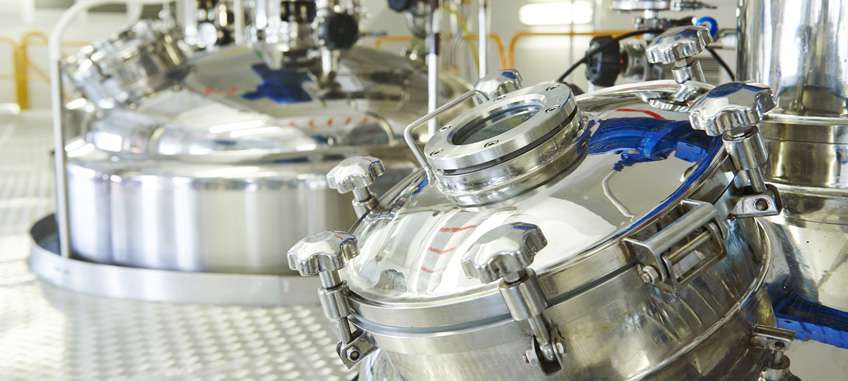
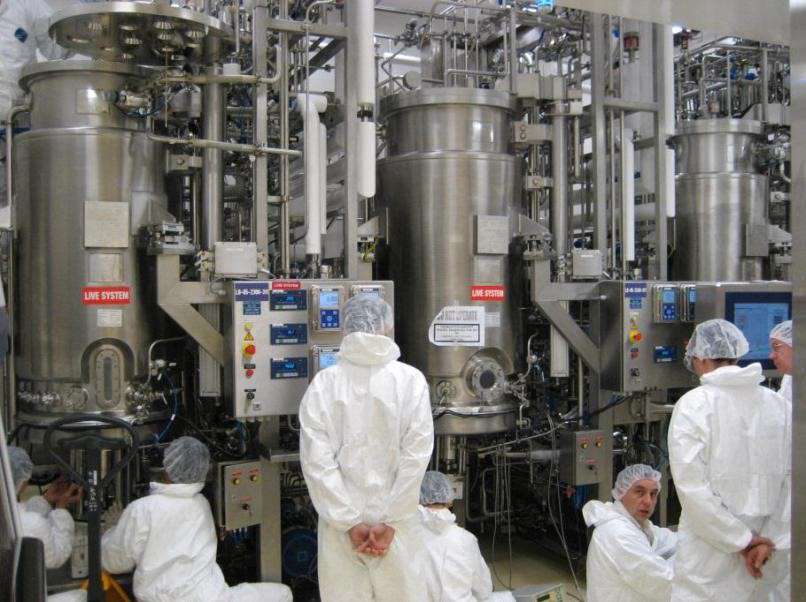
This company uses a fermenter to manufacture biocultures. The fermenter’s agitator is driven from below and the rotating stirrer shaft is sealed against the tank bottom. The seal is flanged to the tank, preventing product leaking out along the shaft. As it is a bottom-entry seal, it is in direct contact with both the product to be sealed and the full product temperature.
Operating conditions
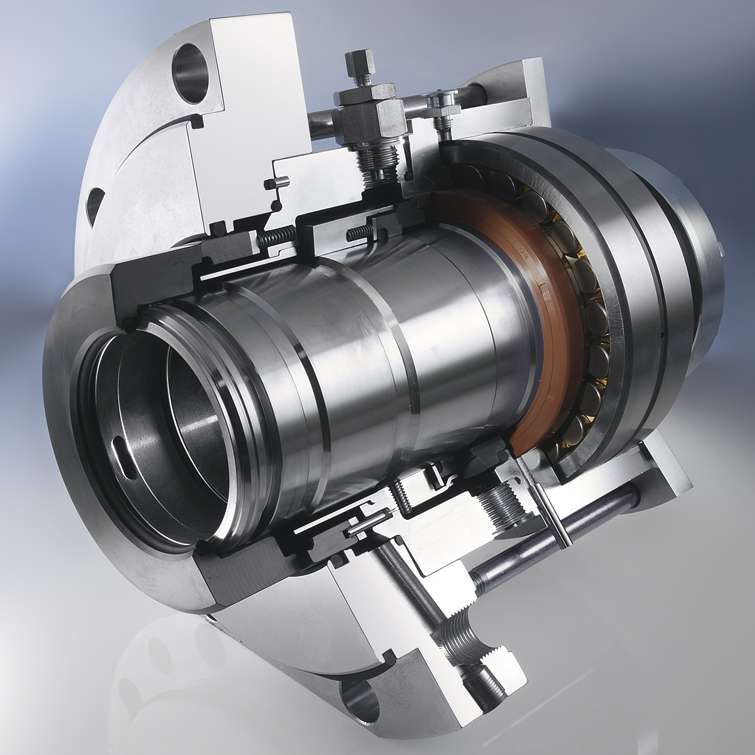
EagleBurgmann used the HSMR333 sterile version of its MR-D liquid-lubricated double seal as this is ideal as a top, side or bottom-entry seal for agitators. The smooth surface contour of this design has no dead spaces and so meets stringent hygiene standards. The only material that the pharmaceutical manufacturer had approved for seal faces in contact with the product was silicon carbide, so the sliding faces had to be implemented as a hard-to-hard combination. This pairing requires optimal lubrication of the sealing faces, however, so extremely high precision grooves are milled into the sliding faces; these optimize distribution of the sealing and protecting lubricating fluid.
Another challenge for the development of sealing solutions for the pharmaceutical industry (particularly for biopharmaceutical production) is that very few process materials are approved for use as barrier media. Indeed, only steam condensate, i.e. highly purified water, could be used to seal the fermenter’s agitator shaft.
Once the seal had been in use for a while, a combination of the steam condensate’s poor lubricating properties and the hard-to-hard pairing of the seal faces regularly resulted in damage to the lubrication grooves. It was assumed either that particles of silicon carbide were able to enter the tank with the biocultures or that the seal was contaminated with the product. The damaged grooves also increased the leakage rate.
To make matters worse, the venting of the seal proved to be another element of uncertainty which, due to the process, was difficult to eliminate.
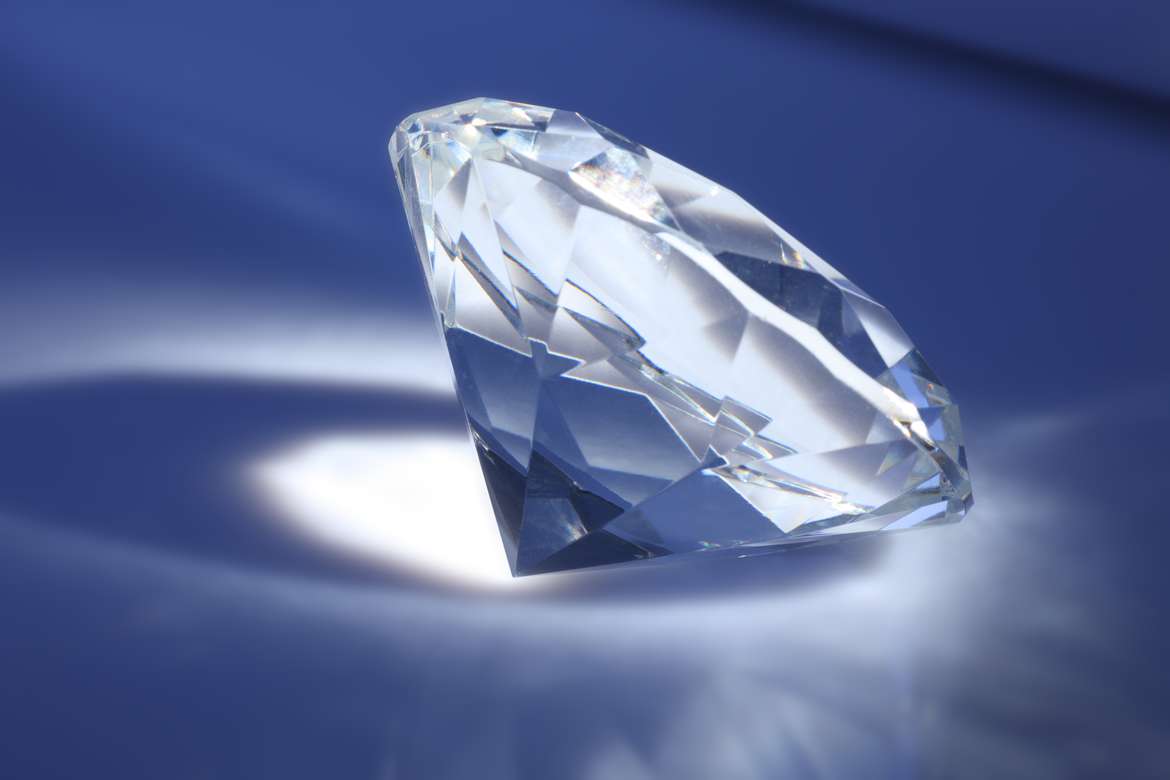
After in-depth examination of all the potential technical solutions, EagleBurgmann was able to leverage experience gained with specially-coated seal faces for use in multi-phase pumps and apply it to the fermenter agitator. Seals in multi-phase pumps are again susceptible to inadequate lubrication, but the sealing specialist offers DiamondFace technology precisely for such harsh conditions. A special process creates a microcrystalline diamond coating on the sliding faces; this protects against wear caused by media with a high solids content and partial dry contacting of the seal.
For the customer, EagleBurgmann replaced the seal face and stationary seat with versions with the DiamondFace coating. Due to this coating's fantastic sliding properties, grooves were not necessary, which, incidentally, reduced the leckage rate of the seal. The seal now appears to be entirely insensitive to inadequate lubrication but, even without grooves, the leakage rate still exceeded the desired values that could be achieved with the conventional SiC version (as previously used). A significant part of the problem of reducing leakage was resolved by polishing the sliding faces to suit the application. The barrier pressure was also reduced, so less barrier medium was supplied to the seal. With the DiamondFace coating, the sliding faces were unaffected by this. In the end, leakage dropped to 0.1 liters within three weeks and the customer was entirely satisfied with this value.
After they had been in operation for six months, the sliding faces of the sealing rings were tested. No issues were identified, so they remained in service. The seals have now been in use around the clock for a few years. Fewer personnel and much less time are now needed to maintain the seals, but this is not all. The original production downtimes are another thing of the past for the customer. The pharmaceutical manufacturer is convinced by the characteristics of silicon carbide with the DiamondFace coating that this combination is now approved as a technological standard.
DiamondFace
Want to know more about? Download the “DiamondFace Technology for Mechanical Seals” brochure from the Download Center to discover what this innovation can do for you.
Our range of products & services for the pharma industry
EagleBurgmann supports the pharmaceutical industry holistically in sealing technology. Find out more here.
MR-D double seal with DiamondFace in bioculture production
EagleBurgmann product portfolio of agitator seals.

Things get hot in rotary kilns, very hot in fact. In the production of cement, for example, the thermometer measures more than 1,000 degrees Celsius. Sealing systems from EagleBurgmann, a company of the Freudenberg Group and EKK, make sustainable contributions to environmental protection, energy efficiency and process reliability under these "fiery" high-temperature conditions.

A boiler circulation pump in a power plant conveys very hot and pressurized water. The pump has no cooling jacket, which increases the risk of a thermosiphon effect.

Pharmaceutical manufacturers like the Bayer AG rely on mechanical seals in their manufacturing plants.
When the process medium in the production of metformin may not be contaminated with sealing medium under any circumstances, gas-lubricated seals for agitator shafts are the first choice. The Norwegian company Vistin Pharma took a daring step away from oil-lubricated to nitrogen overlayed seals.